Vores stæmmer er framtidsdrømme
Our voises carry futur dreams
2025 | large-scale installation | exhibited | Gloria’s foyer Roskilde Festival 2025; GRASP 2025
including
facade | 30 x 7 m | Vores stæmmer er framtidsdrømme (Our voises carry futur dreams)
8 wall-mounted works | 122 x 170 cm | Dyslektiske styrker er frø vi vil så (Dyslexic strengths are seeds we will plant)
12 seating elements | 120x120 cm | Lovforslag: Ordblinde med stolthed (Legislative proposal: Dyslexics with pride)
sculpture | 4 m | Gummifinger 1 (Elastic finger 1)
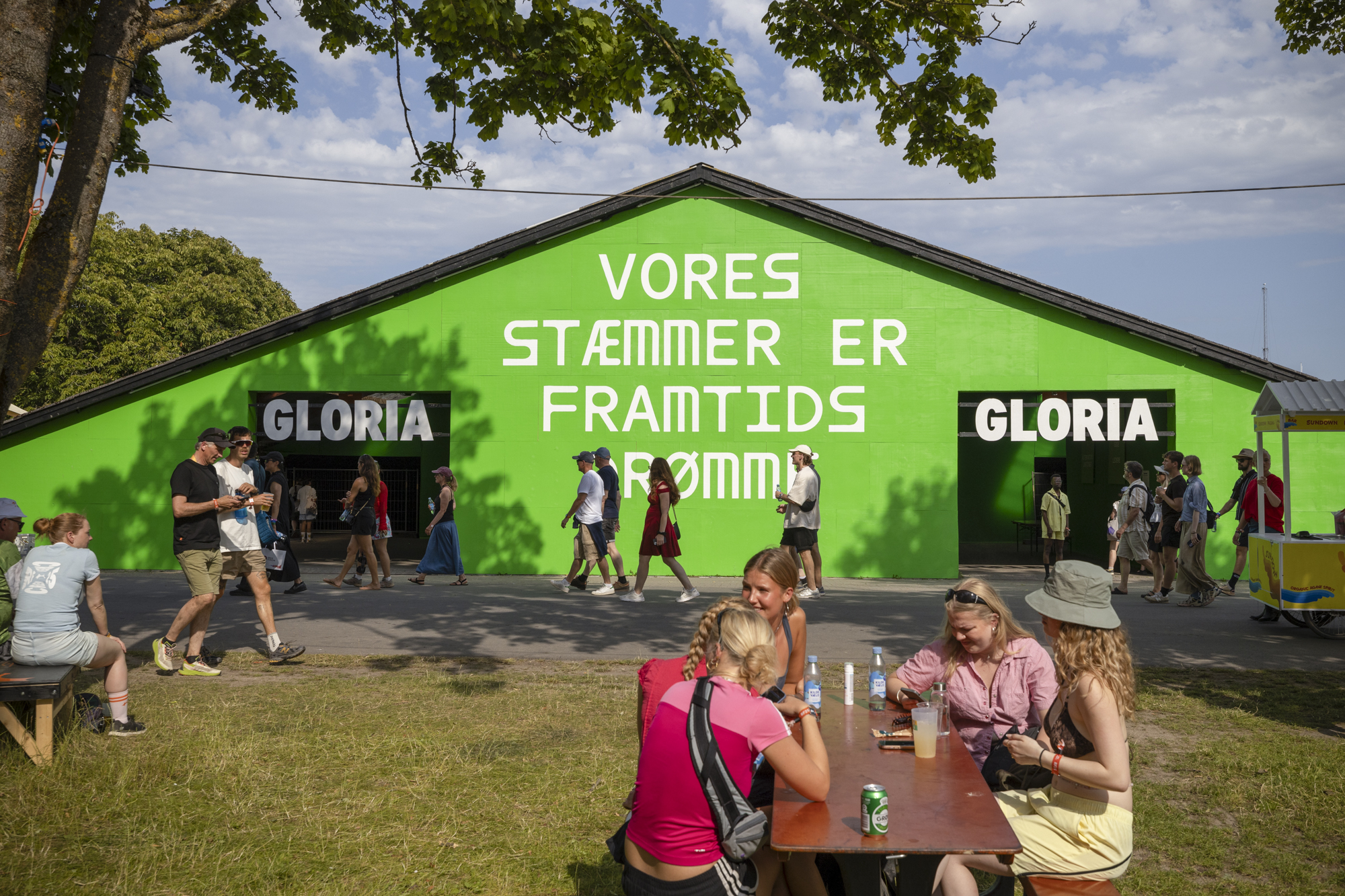
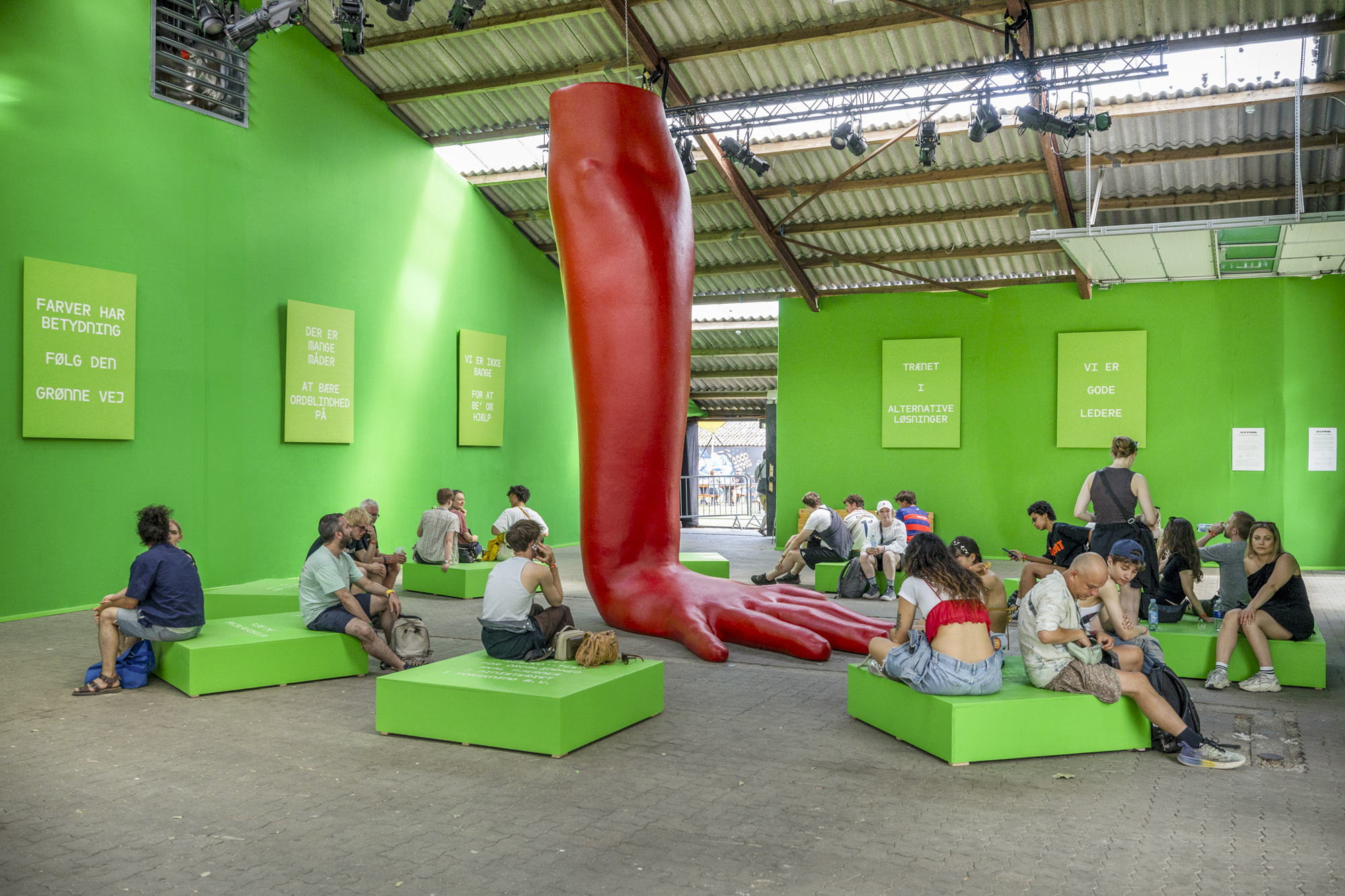
Visual artist Julie Nymann invites us into an installation where green surrounds us. People who have difficulties converting sound into words and vice versa are, in the National Danish Dyslexia Test, labelled with the colour red.
Nymann questions this colour coding, and wonders what it means for our self-understanding when we are categorised with a colour that signals ‘danger’ and ‘warning’?
Using green as the dominant colour, Nymann challenges the stigma and prejudices often associated with dyslexia, shifting the focus toward the strengths and advantages of being dyslexic.
Nymann questions this colour coding, and wonders what it means for our self-understanding when we are categorised with a colour that signals ‘danger’ and ‘warning’?
Using green as the dominant colour, Nymann challenges the stigma and prejudices often associated with dyslexia, shifting the focus toward the strengths and advantages of being dyslexic.

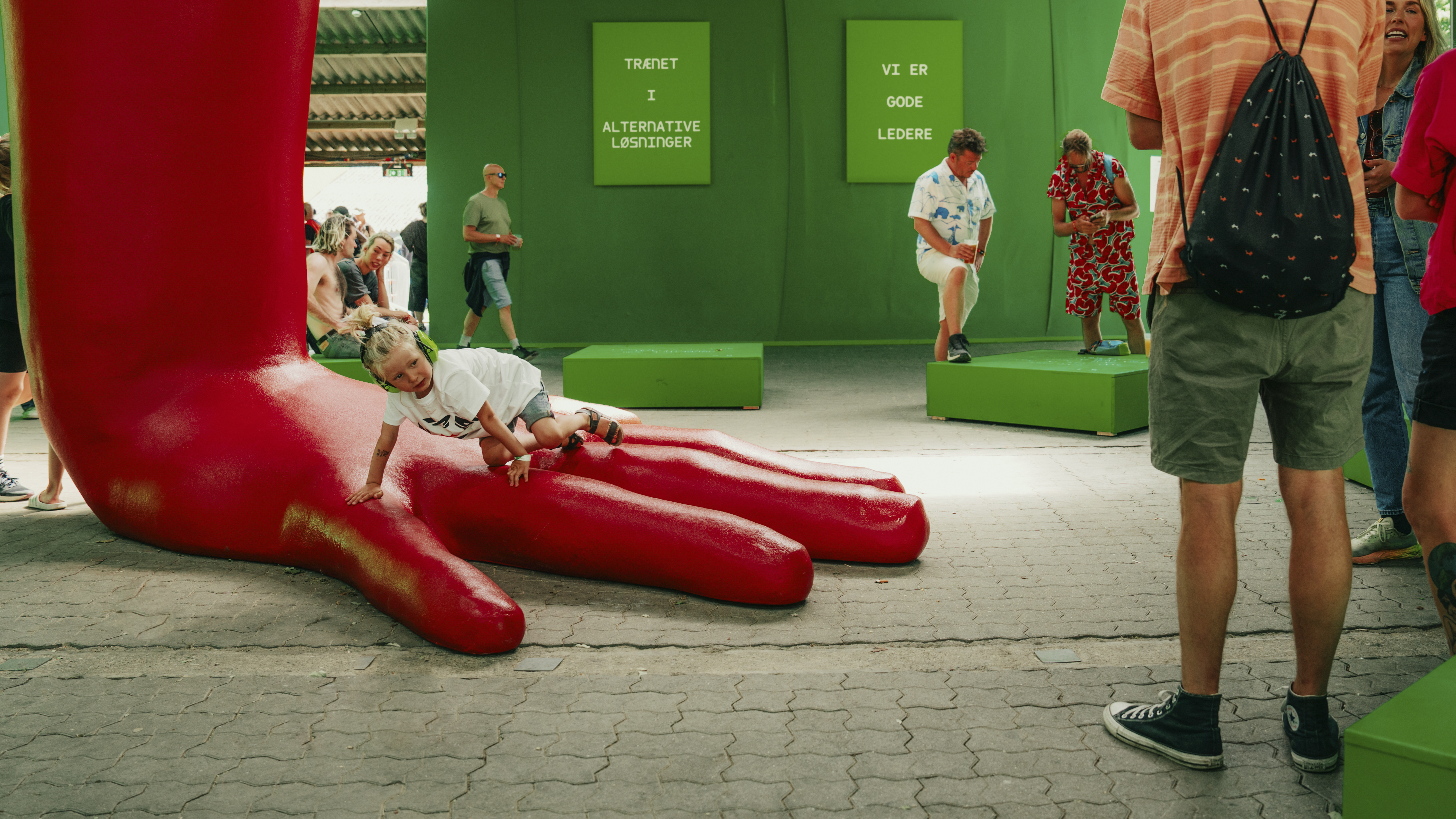
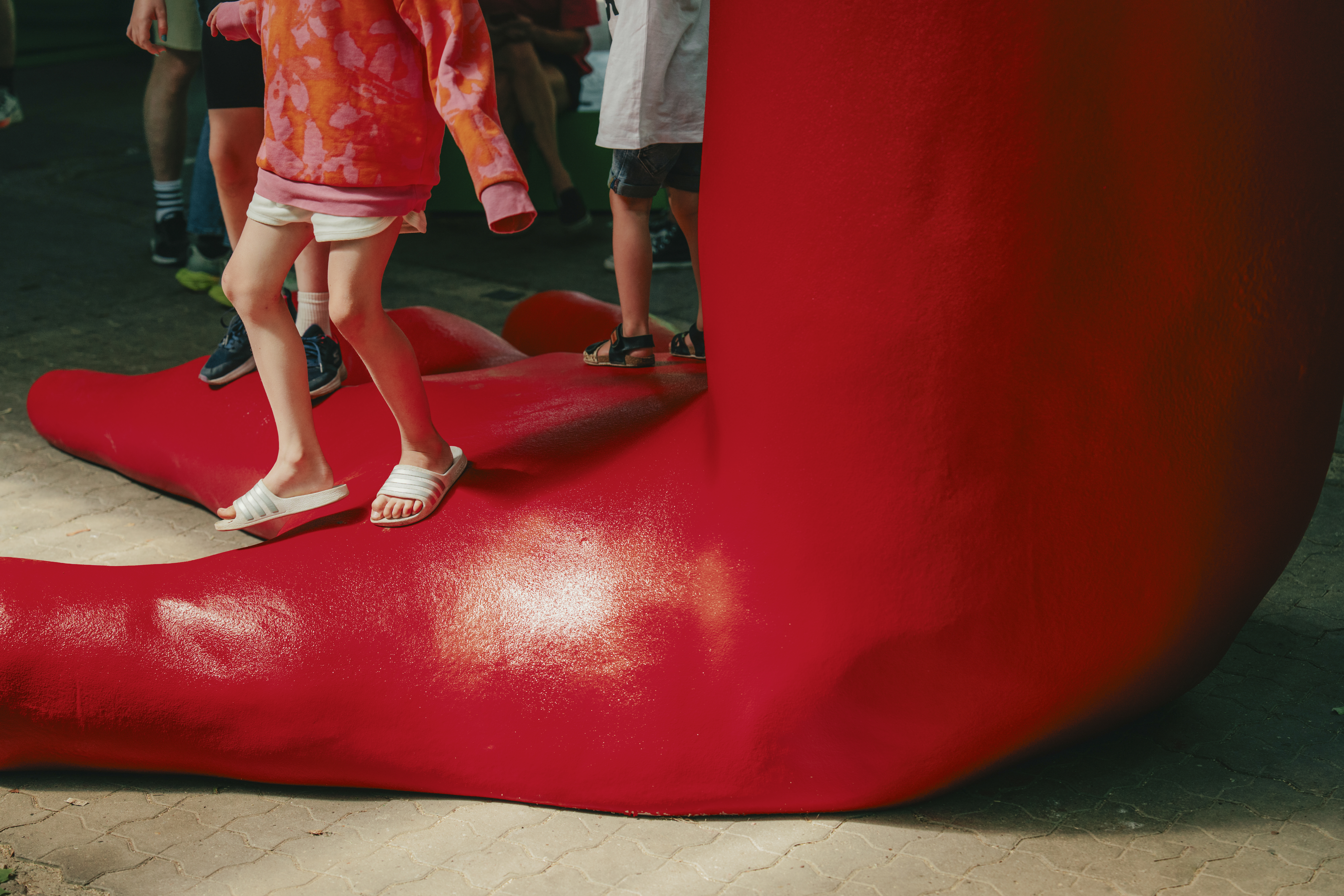
At the centre of the room rises the four-metre-tall red hand, Elastic Finger 1, with its palm pressing against the ground. The sculpture is a 3D scan of a child’s hand and functions both as a sculptural element and interactive seating spot.
The work was inspired by Nymann’s extensive research into the history of dyslexia in Denmark, where parallels were drawn to physical traits such as “rubber fingers,” as described in the alternative practitioner Kaare P. Johansen’s essay It’s in the Fingers (Politiken, 2002). These outdated perceptions and alternative treatments, which Nymann also personally experienced as a child, often reinforced feelings of inadequacy.
The installation on Roskilde Festival’s Gloria Stage, surrounded by green furniture and slogan posters, reflect both historical misunderstandings and a forward-looking, positive approach to dyslexia, emphasizing strengths and community.
The work was inspired by Nymann’s extensive research into the history of dyslexia in Denmark, where parallels were drawn to physical traits such as “rubber fingers,” as described in the alternative practitioner Kaare P. Johansen’s essay It’s in the Fingers (Politiken, 2002). These outdated perceptions and alternative treatments, which Nymann also personally experienced as a child, often reinforced feelings of inadequacy.
The installation on Roskilde Festival’s Gloria Stage, surrounded by green furniture and slogan posters, reflect both historical misunderstandings and a forward-looking, positive approach to dyslexia, emphasizing strengths and community.
On the surrounding seating, you will find Legislative proposal: Dyslexics with pride, an artistic manifesto, written as a Danish legislative proposal.
The proposals call for changing the terms and symbols that authorities and educational institutions use about people with dyslexia, as well as how the school system should be changed to better support dyslexia in literacy education.
One proposal is to move away from the Danish term “word-blindness.” Many other countries use the term dyslexia, which the artist herself also uses. Another is to eliminate the red, yellow, and green colour coding from the National Danish Dyslexia Test to help reduce stigma and feelings of inadequacy.
The proposals call for changing the terms and symbols that authorities and educational institutions use about people with dyslexia, as well as how the school system should be changed to better support dyslexia in literacy education.
One proposal is to move away from the Danish term “word-blindness.” Many other countries use the term dyslexia, which the artist herself also uses. Another is to eliminate the red, yellow, and green colour coding from the National Danish Dyslexia Test to help reduce stigma and feelings of inadequacy.
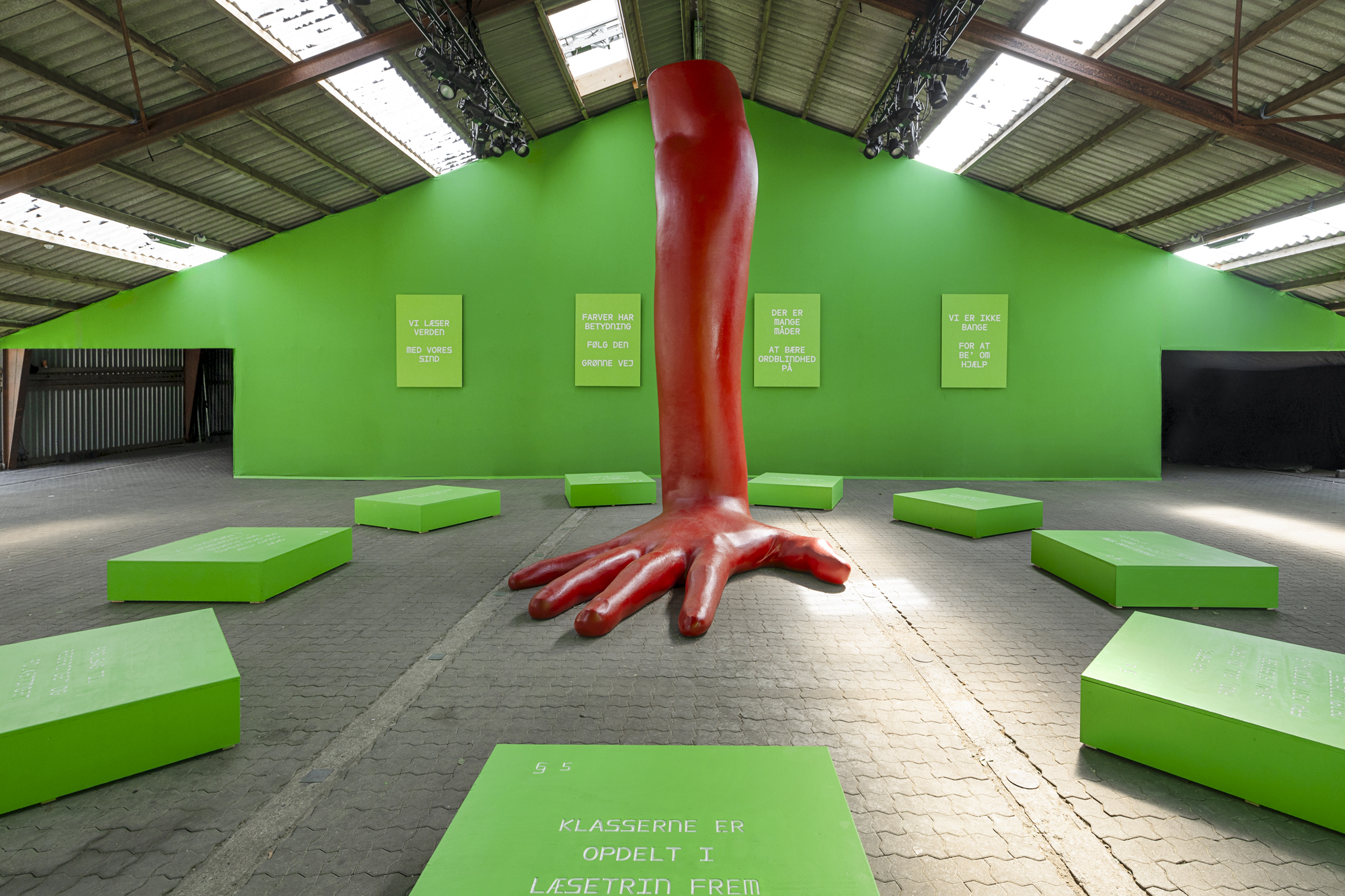
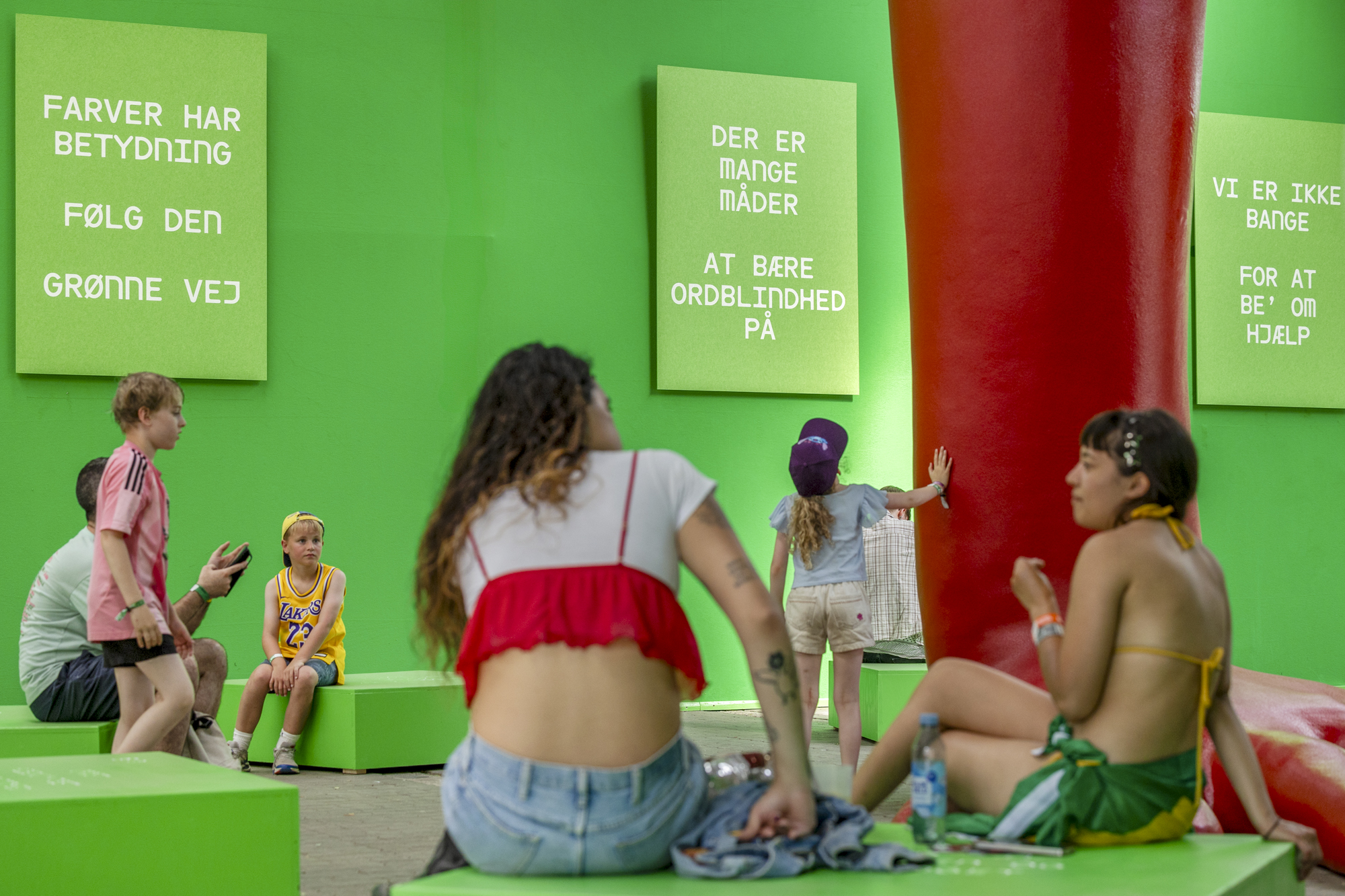
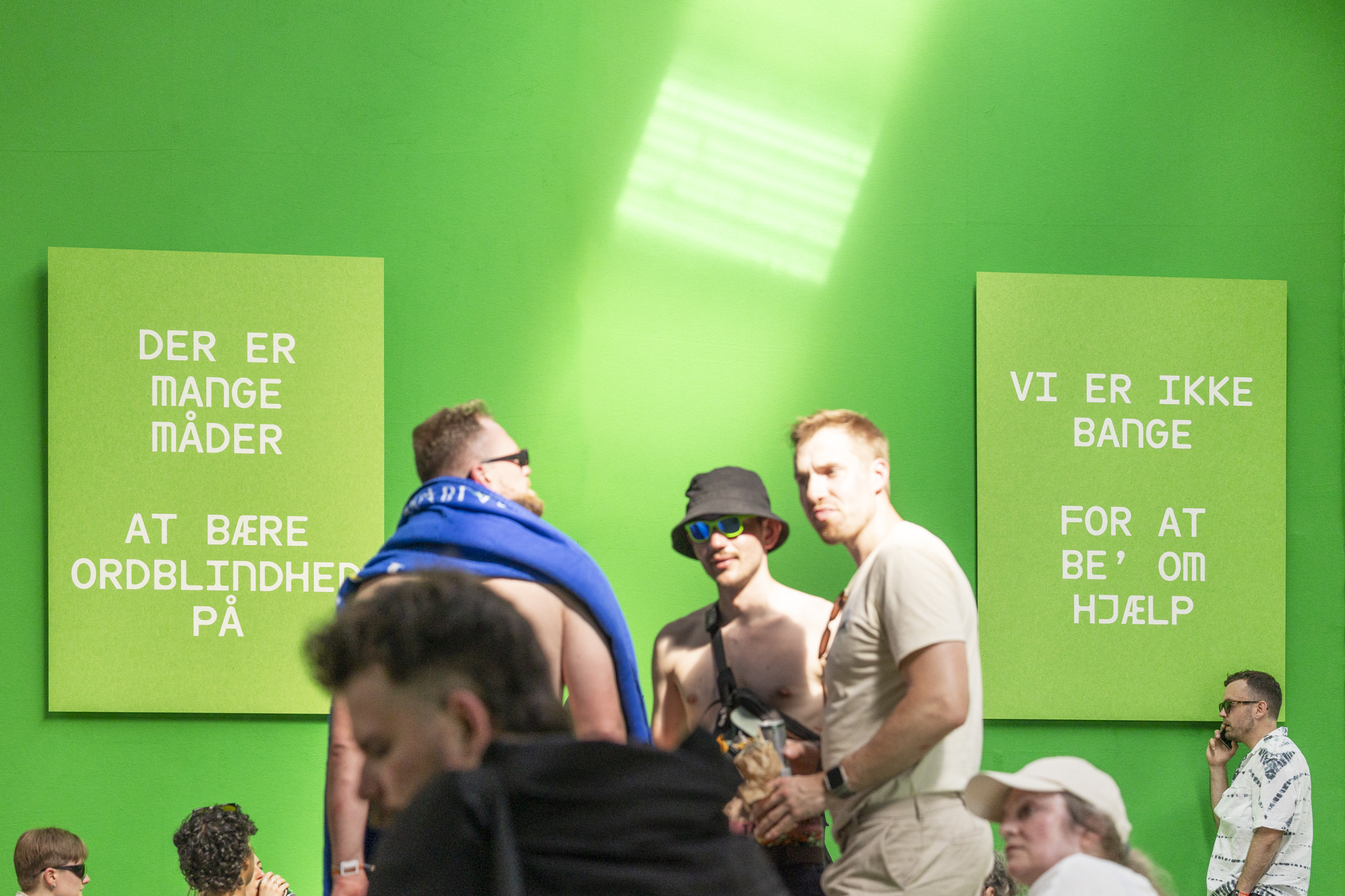

Nymann lives with dyslexia and has asked 80 other people what advantages they see in their own dyslexia. The focus on these strengths is expressed in the hanging wall pieces Dyslexic strengths are seeds we will plant.
The voices form a collective expression that recognises the different skills people with dyslexia develop to navigate a society that is not designed for everyone, such as leadership, perseverance, and the courage to ask for help.
At the same time, there is a collective call for all of us: to walk the green path together, recognising our differences as individuals and embracing the unique strengths they bring. What would happen if we turned it around and instead used a colour that symbolises strength?
The voices form a collective expression that recognises the different skills people with dyslexia develop to navigate a society that is not designed for everyone, such as leadership, perseverance, and the courage to ask for help.
At the same time, there is a collective call for all of us: to walk the green path together, recognising our differences as individuals and embracing the unique strengths they bring. What would happen if we turned it around and instead used a colour that symbolises strength?
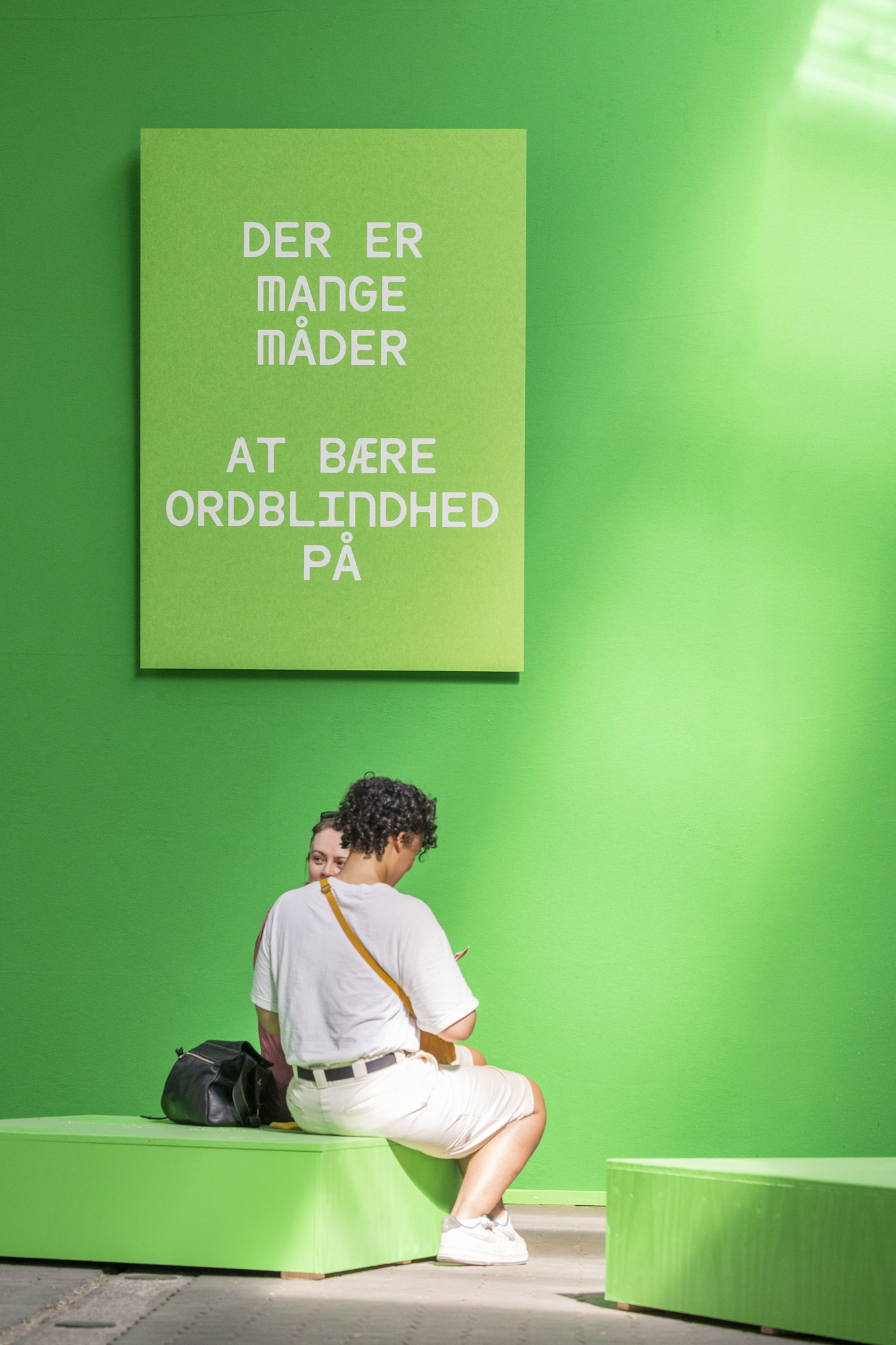
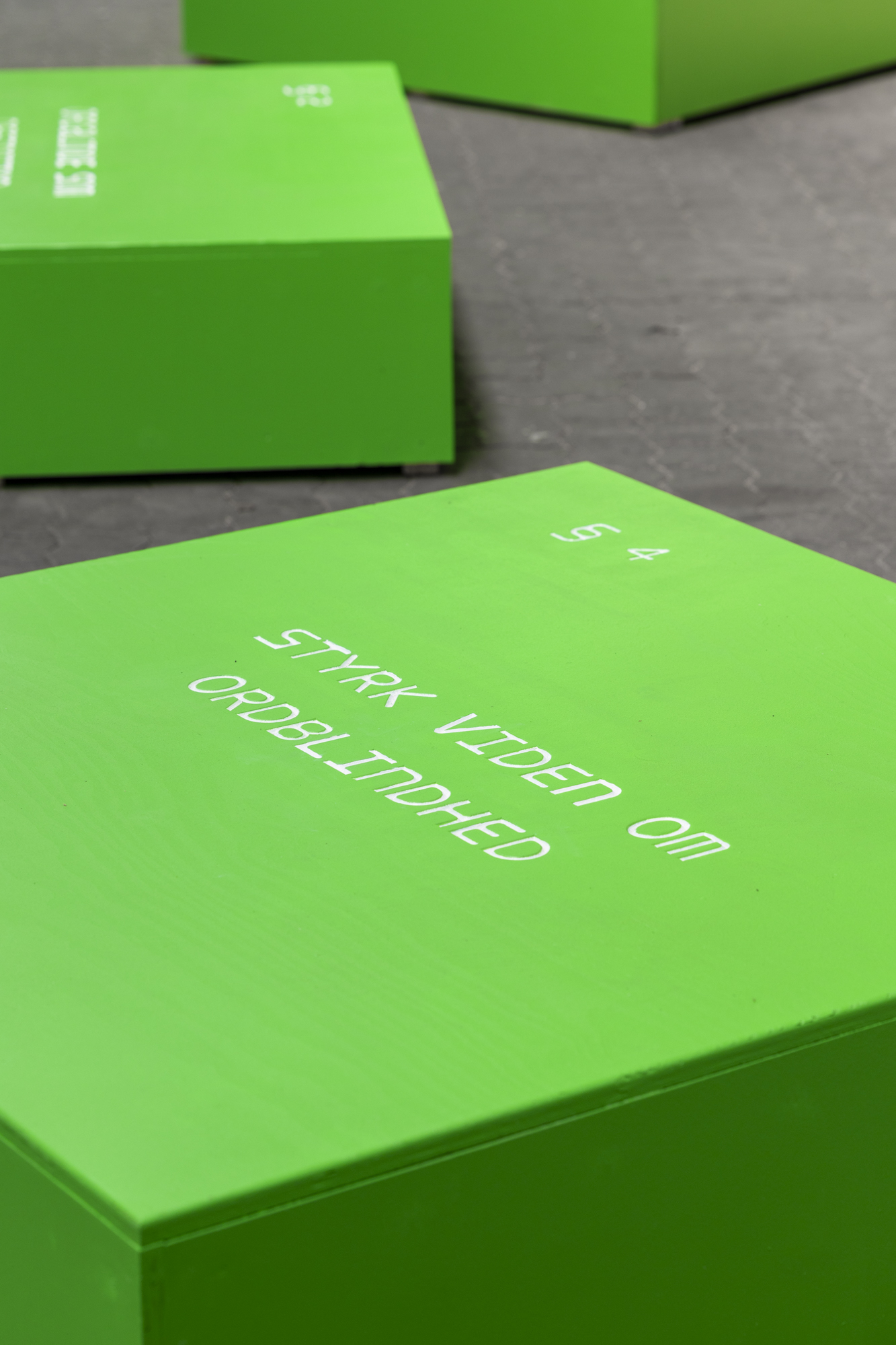
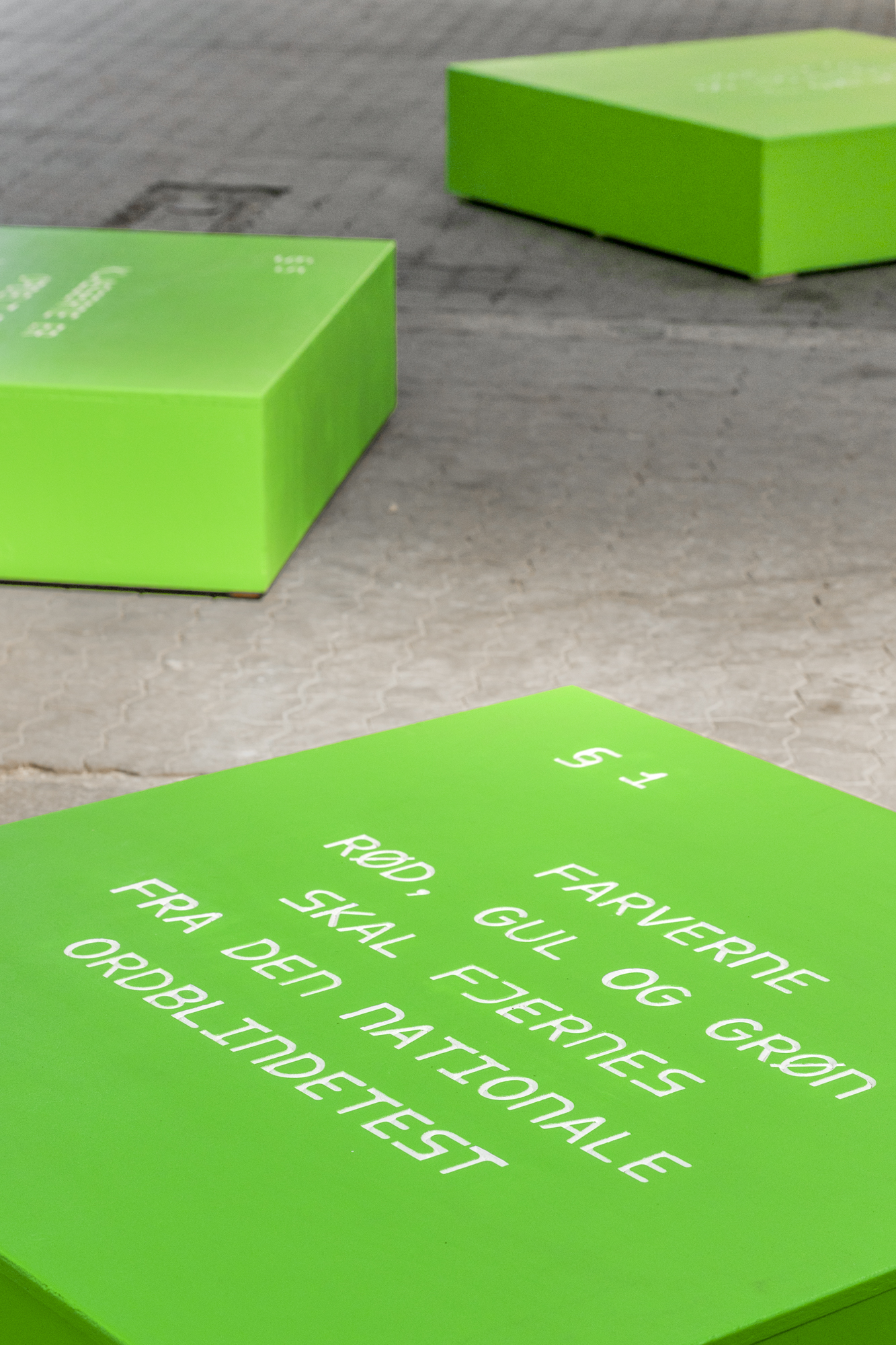
Installation view at Gloria’s foye Roskilde Festival 2025. photo Frida Gregersen
CREDITS
artist
Julie Nymann
Production Lead
Kristine Bech Sørensen
Grafisk Design
Louis Montes
Typeface
ABC Dinamo
Sculpture
Wow Factory
Install team
Tilda Lundbohm, Noah Holtegaard, Alda Mohr Eyðunardóttir, Stine Reitz, Rolf Drewsen, Lars Buchholtz, Nikolaj Phillipsen, Sofie Bymar, Sine Brik
Special thanks
Torso Electronics
Communications Strategic Rytter & Denke
Studio
Karina Lykkesborg, Pauline Koffi Vandet, Katinka Saarnak, Malou Solfjeld
Julie Nymann
Production Lead
Kristine Bech Sørensen
Grafisk Design
Louis Montes
Typeface
ABC Dinamo
Sculpture
Wow Factory
Install team
Tilda Lundbohm, Noah Holtegaard, Alda Mohr Eyðunardóttir, Stine Reitz, Rolf Drewsen, Lars Buchholtz, Nikolaj Phillipsen, Sofie Bymar, Sine Brik
Special thanks
Torso Electronics
Communications Strategic Rytter & Denke
Studio
Karina Lykkesborg, Pauline Koffi Vandet, Katinka Saarnak, Malou Solfjeld
Institutional Collaborations
Roskilde Festival & Art Hub Copenhagen
Head of Art & Activism
Sarah Staalhøj
Head of Art Production
Martin Ilsøe
Curator
Andrea Mæland
Choir Communication
Sarah Pihl Petersen,Thea Møller Jensen
Special thanks
The Behind-the-Scenes Team
Supported by
Roskilde Festival, Art Hub Copenhagen, Statens Kunstfond, Statens Værksteder for Kunst, Dansk Tennis Fond, Honoré Fonden, Den Hielmstierne-Rosencroneske Stiftelse, BUPL’s solidaritets- og kulturfond, Messetæpper og Flügger
Roskilde Festival & Art Hub Copenhagen
Head of Art & Activism
Sarah Staalhøj
Head of Art Production
Martin Ilsøe
Curator
Andrea Mæland
Choir Communication
Sarah Pihl Petersen,Thea Møller Jensen
Special thanks
The Behind-the-Scenes Team
Supported by
Roskilde Festival, Art Hub Copenhagen, Statens Kunstfond, Statens Værksteder for Kunst, Dansk Tennis Fond, Honoré Fonden, Den Hielmstierne-Rosencroneske Stiftelse, BUPL’s solidaritets- og kulturfond, Messetæpper og Flügger